

When intelligence meets the unexpected.
What happens when intelligence encounters something it wasn’t expecting? Follow the questions connecting AI, quantum research, human judgment and the world beyond the laboratory.
Illustrative rescue concept. The app screen is composited from a saved screenshot; this is not an actual deployment or a live drone-control connection.
The answer sounds convincing.
What does the record say?
Start with the distance between a confident explanation and the evidence behind it.
The Truth Gap
Why the Smoothest Answer in the Room May Be the Least Reliable
An editorial introduction to human defensive reasoning and AI hallucination under pressure. Read it with one question in mind: which part of the explanation could you check?
Something changed.
What would you ask?
In a fictional rescue-review exercise, two drone images of the same area appear to disagree. A responder has the records. What they mean still needs examination.
A fictional thought experiment about evidence and responsibility. It does not assess rescue conditions, direct responders or authorize operations.
Start with the difference.
Two images seem to tell different stories. Before interpreting the difference, ask whether they show a comparable place and moment.
What would change your mind?
Use it in your next design review, research discussion or everyday decision. Better questions travel.
You can select the text and use your device’s Copy command.
Curiosity has more than one direction.
Read across ideas, research and the decisions that connect them. These topic choices organize the stories already in the journal.
No matching stories yet.
Try another topic or a shorter search. The full archive remains available below.
New possibilities.
Clear distinctions.
“Quantum AI” is a starting point for questions. Ask which computation is involved, where it runs, what was tested and what the result actually shows.

Classical AI & edge computing
Classical processors run conventional software and AI models. “Edge” describes computing near a sensor, device or user. It does not mean quantum hardware.
Read NIST-hosted research on edge intelligence (PDF) ↗Tensor methods
Tensors organize multidimensional quantities. Factorization and tensor-network methods can reorganize or approximate computations. They can run on classical processors; using them alone does not demonstrate quantum advantage.
Explore NVIDIA’s tensor-network documentation ↗Quantum-inspired methods
Some classical algorithms draw ideas from quantum mathematics or models. “Inspired” does not mean that a physical quantum processor performed the calculation. Ask for the actual method, baseline and benchmark.
Compare with physical quantum computation ↗Physical quantum hardware
Quantum computers manipulate physical qubits. Their requirements depend on the technology. A proposed connection to robotics does not establish that the robot carries quantum hardware or that an advantage has been demonstrated.
Read NIST’s quantum computing explainer ↗Post-quantum security
Post-quantum cryptography addresses cryptographic threats from quantum computers. It is a security discipline, not evidence that an AI output is correct or an autonomous system is safe.
Read NIST’s post-quantum introduction ↗Autonomy assurance
Assurance asks what supports confidence in a system for a particular purpose, within stated limits. Evidence, review and responsibility remain necessary regardless of the computing method. Referencing a framework is not certification.
Explore the voluntary NIST AI Risk Management Framework ↗A conceptual relationship · no deployed integration is asserted
Separately evaluated tensor, quantum-inspired or physical quantum methods may inform a future design. This is not a live control connection.
The qX Alliance’s direction is to explore evidence-grounded, trusted Quantum AI at the edge. Real-time integration remains a research and development objective here. This page does not assert demonstrated performance, operational availability or certification.
Bring the question you haven’t solved yet.
Different disciplines can notice different gaps. Share a non-confidential question, propose an editorial perspective, or ask how a collaboration could begin.
An exploratory conversation does not grant membership, appointment, confidentiality or access rights. Please do not send sensitive records or operational data.
Jay Shears
Read the bylined essays in their original context—from the limits of a convincing answer to the evidence behind a technology decision.
A place for your perspective.
Propose a question or an account you have permission to share. Attribution, relevant relationships and publication permission should be agreed before a contributor’s story appears.
Keep your curiosity moving.
Receive new Proofward stories, research perspectives, and questions worth thinking about.
Use the email signup below. Confirmation is required; you can unsubscribe through any update. The signup is handled by this site’s Squarespace newsletter service. Questions about your information?
Email updates are separate from Alliance participation. Subscription does not grant membership, admission, certification or other access rights.
Explore the qX Alliance on YouTube.
Continue the conversation through the channel’s available videos. Choose Subscribe on YouTube if you want to follow along.
Opens YouTube in a new tab. No automatic subscription. No publishing schedule is promised.
Proofward™ · Beyond trust. Toward proof.
Editorial, illustration and rights notes
Journal recommendations link to original articles with their existing authorship and dates. Historical roadmaps and announcements are not confirmation of current availability. Research explanations are educational; the fictional rescue-review exercise does not assess evidence, certify compliance, determine eligibility or authorize operations. The generated scenes are illustrative concepts, not records of actual facilities, people or deployments. The iPhone screen uses a saved app screenshot as its reference; its appearance does not establish a live integration, drone control or an operational assessment.
Respective rights holders and applicable Shears–Mukherjee inventor and custodial boundaries remain unchanged. Reading, subscribing or contacting the Alliance grants no express or implied license, ownership, co-inventorship, confidentiality, certification or operational authority. Any applicable participation or commercial rights require the relevant written agreement.
BEYONDx Advisors Unveils The Truth Calculator™ Roadmap for Evidence-Ready Decisions in the Age of AI
See how qX Alliance™, BEYONDx Advisors, qX‑TGRI™ and The Truth Calculator™ connect to support evidence-ready AI decisions while preserving ownership and IP boundaries.
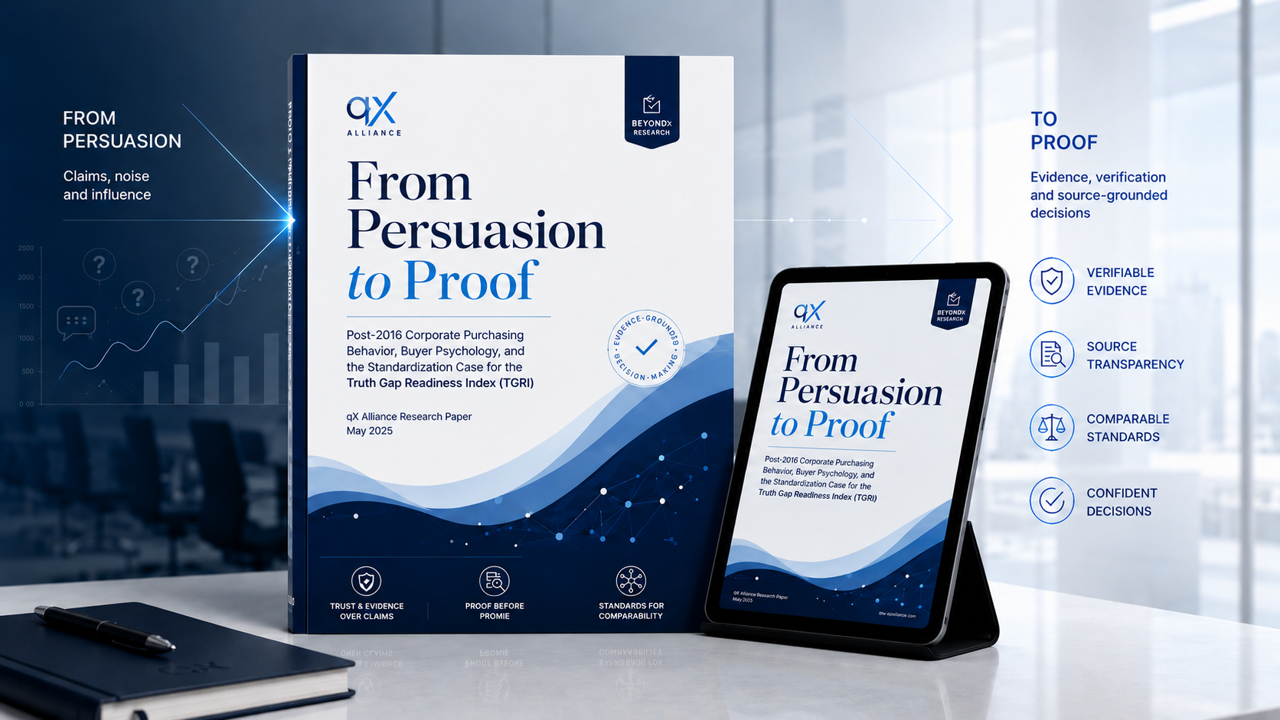
The New Corporate Buyer Doesn’t Want Belief. The New Corporate Buyer Wants Proof.
The modern corporate buyer does not want belief — the buyer wants proof. This article explains how enterprise purchasing has shifted from persuasive claims to defensible evidence, and why the next era of growth will belong to companies that can make their value provable before procurement, security, legal, and the board enter the room.
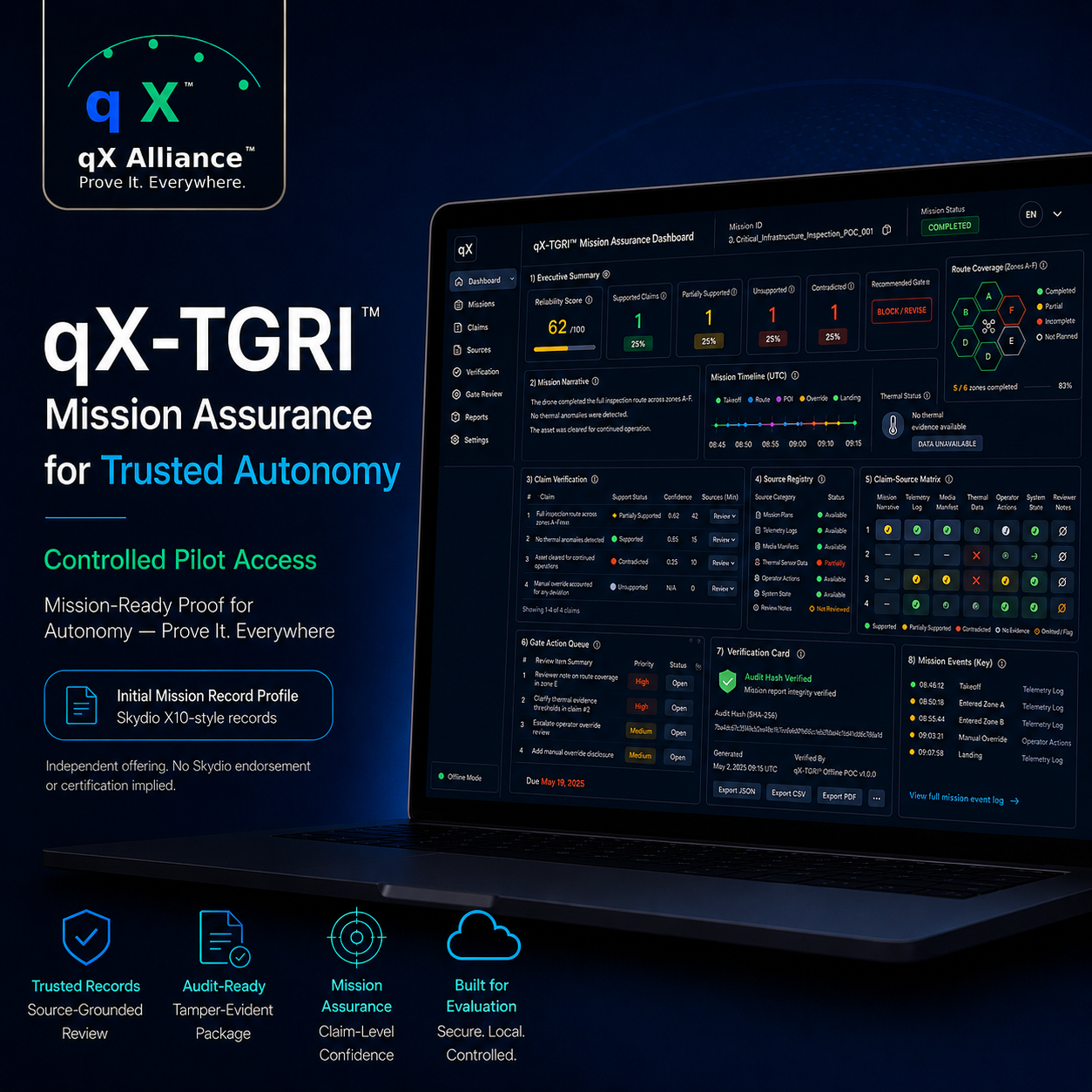
qX™ Alliance Press Release
qX-TGRI™ is mission assurance software for autonomous systems. It acts as a proof layer between the mission record and the mission report. When a drone, robot, vehicle, or AI-assisted platform completes a mission and produces a confident operational narrative, qX-TGRI™ evaluates that narrative against authorized mission evidence such as telemetry, route coverage, media metadata, sensor status, operator actions, reviewer notes, mission events, and source records. The result is a readiness-centered view of the mission output: what is supported, what is missing, what is contradicted, and whether the report should be released, reviewed, revised, escalated, or blocked before people rely on it. Autonomous systems capture the mission record. qX-TGRI™ helps prove what that record supports. This announcement marks a defining step for the qX™ Alliance as it moves from charter formation and trust-framework development into controlled commercial mission assurance for autonomous systems.
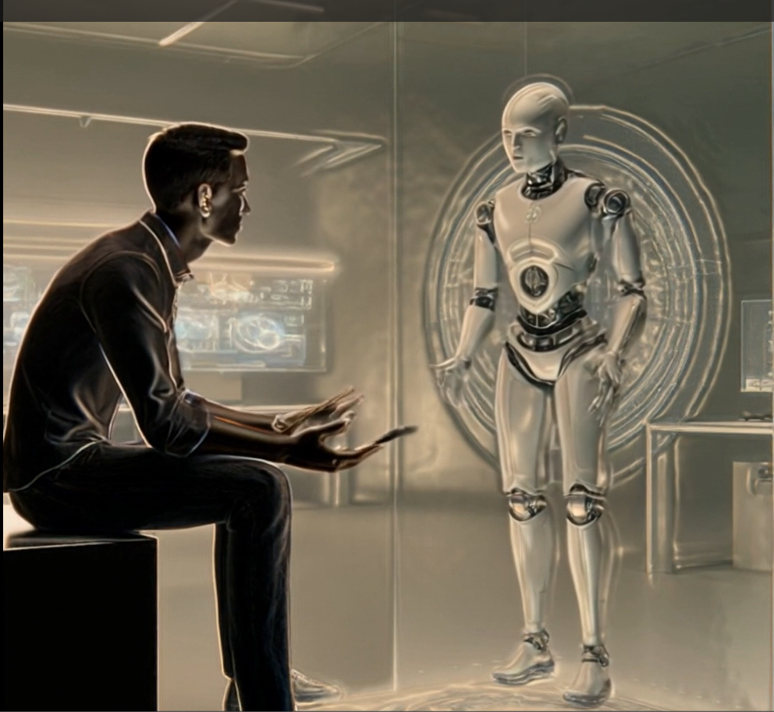
The Truth Gap: Why the Smoothest Answer in the Room May Be the Least Reliable
An introduction to qX-TGRI, human defensive reasoning, and AI hallucination under pressure
There is a certain kind of explanation that arrives wearing a very nice suit.
It has clean formatting. It sounds confident. It uses the right vocabulary. It makes eye contact. It may even bring citations.
And still, somehow, it is wrong.
Not always dramatically wrong. Not usually “the moon is made of cheese” wrong. More often, it is wrong in the dangerous modern way: polished, plausible, convenient, and just far enough away from the source record that no one notices until the decision has already been made.
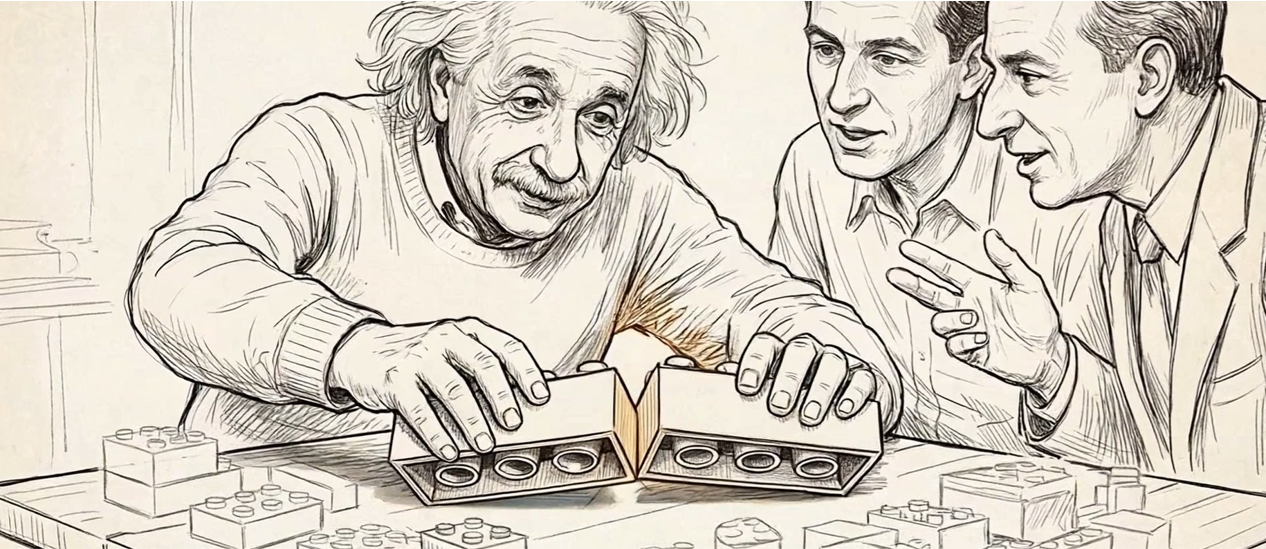
The Universe Is Less Separate Than We Thought
What quantum entanglement can teach us about connection, humility, and proof.
We live as if separation is obvious. My body is here. Yours is there. My thoughts are inside my head. Yours are inside yours. A cause happens in one place. An effect shows up somewhere else.
If anything meaningful passes between two points, we assume something must travel across the gap: a signal, a force, a message, a wire, a wave, or at least a well-mannered internet connection.
That picture has served us well. It helped us build bridges, aircraft, satellites, medical devices, data centers, and coffee machines that seem to understand our emotional state before 7 a.m. But physics has a long history of being impolite to common sense.